HappyDude88's Search

About Me

My photo
Hello, this is Siwri88, better known to some as Simon. Currently work as a picture researcher and product editor with a leading publishing company that works with trading cards and sticker albums on a variety of licenses in sport and entertainment. Freelance Journalist and writing a book in my spare time. Achieved a 2:1 studying BA Hons Journalism at the University of Northampton (2009-2012). Enjoy reading!
Showing posts with label South Africa. Show all posts

Thursday, 22 September 2011

Rugby World Cup 2011 - The Irish blow it wide open

RUGBY World Cup 2011 is warming up nicely and a shock result at the weekend blew the competition wide open.  Ireland produced a heroic display out of nowhere to defeat one of the pre-tournament favourites Australia in Auckland, 15-6.  Not only does it mean that the Irish should finish top of Pool C, it now means Australia, South Africa and New Zealand could well be in the same section in the quarter-finals.
LEADER: Brian O'Driscoll inspired Ireland to a famous win
    The Irish had laboured through their opener against the USA and few gave them much hope, but the scoreline didn’t flatter them either.  Two disallowed tries in the closing stages could have added even more gloss for the underdogs.  Two penalties each from Dave Sexton and veteran Ronan O’Gara, in addition to a Sexton drop goal were enough for glory.  Two penalties from James O’Connor was the only Wallabies response and by failing to get a bonus point for losing by less than seven points, it severely dents their chances of topping the pool.  Despite winning the Tri-Nations before the tournament, I didn’t predict much from Australia in this Rugby World Cup and perhaps, this result shows the inexperience at the highest level for this young crop of players.
     South Africa might have also made a very unconvincing start against Wales, but the defending champions are beginning to find their feet.  Six unanswered tries saw them easily brush aside a potential banana skin in Fiji at the weekend.  Their 49-3 demolition of the Pacific Islanders was followed this morning by a 12-try romp of Namibia at the North Harbour Stadium.  The 87-0 landslide of their African neighbours included a record-breaking try for Brian Habana, who became the Springbok’s leading try scorer in their distinguished rugby history.  However, Habana’s body language throughout was poor and he was substituted early in the second half, with doubts over the rest of his participation in the Rugby World Cup.  The margin of victory was South Africa’s biggest in RWC history and questions have to be asked of Namibia’s performance, as they simply rolled over and died.  I have to agree with Francois Pienaar, who is a leading pundit for ITV’s coverage and the winning captain of the 1995 South African team that Namibia are not up to this standard of rugby.  All the other minnows; Japan, Georgia, Russia and Romania have put in worthy efforts against teams of a higher standard in this competition, yet the Namibians continue to be left behind.
     Hosts New Zealand warmed up for their crunch Pool A clash with France at the weekend by overwhelming Japan 83-7 last Friday in Hamilton.  It was entertainment of the highest standard and Coach Graeme Henry will be delighted to see his side run in more points in the second half, following their stale performance after the interval against Tonga the week before.  John Kirwan, coach of Japan and part of the great All-Black team of 1987 was proud of the efforts his players put in and I don’t think there will be a more popular try scored in the competition than that by Japan’s Hirotoki Onozawa.  The whole crowd in the stadium cheered this try, which was nice to see.  Without Dan Carter, Miles Muliana and Richie McCaw, the All-Blacks looked very formidable.  Despite a 46-19 success over Canada in Napier on Sunday, the French still looked far from convincing, blowing more cold than hot.  They will do well on Saturday to repeat the stunning upsets of 1999 and 2007 against the hosts.
     Great is one word that can’t be used to describe England’s World Cup so far.  Unsavoury tabloid headlines of players drinking in bars and dangerous recreational activities such as bungee jumping dominated the build-up to the Georgia game at the weekend.  Martin Johnson was infuriated, but couldn’t really defend his players after a scrappy 41-10 triumph in Dunedin.  England did score six tries, with flying winger Chris Ashton and Shontayne Hape both crossing the Georgian try-line twice, as the European defence tired in the closing stages.  Despite the bonus point gained, the lack of discipline from England was shocking.  They gave away 11 penalties in the first half and if they do that in the knockout stages, forget winning the Webb Ellis trophy!  Toby Flood had a poor game at fly-half and has subsequently been dropped for the Romania game this weekend.  Johnson’s team need to put in a resounding performance on Saturday morning to silence the doubters once and for all.
    After their narrow and agonising loss to the defending champions the previous weekend, Wales bounced back impressively to overcome Samoa 17-10 in the early hours of Sunday morning.  A sole Shane Williams try was the difference in a hard-fought and bruising encounter, which was dedicated to the lives of the four Welsh miners who lost their lives in the tragedy last week.  This was a game that a Welsh side last year would have definitely lost, so it is encouraging to see them edge these narrow battles.
     Scotland didn’t play in this set of matches, but are injury-free ahead of their encounter with Argentina on Sunday.  No doubt they will have been interested to see the Pumas beat Romania 43-8 and signal their intent for this tournament.  Lastly, the Russian team has made its debut at the finals and despite two defeats; a narrow 13-6 reverse to the USA and a walloping against Italy on Tuesday, they have won the hearts of many neutrals for their intent to play proper rugby.  Apart from Namibia, the minnows of world rugby can be proud of their efforts at this Rugby World Cup as the gap continues to narrow between the heavyweights and the lightweights of the rugby union game.
THE WEEK’S RESULTS: Russia 6-13 USA, New Zealand 83-7 Japan, Argentina 43-8 Romania, South Africa 49-3 Fiji, Australia 6-15 Ireland, Wales 17-10 Samoa, England 41-10 Georgia, France 46-19 Canada, Italy 53-17 Russia, Tonga 31-18 Japan, South Africa 87-0 Namibia

Wednesday, 14 September 2011

Rugby World Cup 2011 - The opening weekend


COLOURFUL: New Zealand welcomed the rugby world spectacularly
THE seventh IRB Rugby World Cup began in New Zealand last Friday with a colourful and electric opening ceremony.  After the opening ten matches of the tournament, no clear-cut favourite has been established, with many of the elite rugby teams really struggling to perform and win matches against the rugby union minnows of the world.  Despite this, there has been no massive upset so far and the rugby is only bound to get better as the tournament progresses.
     As hosts, New Zealand are under great pressure to deliver for a nation, that has suffered this year from the tragic mining disaster and the earthquake that battered Christchurch back in February.  They made a professional start, in defeating Tonga 41-10 in Auckland, but it was far from glorified rugby we’d expect to see from the All-Blacks.  Tonga matched them in the opening ‘Haka’ arrangements, but that was as good as it got for the Pacific Islanders.  They seemed to be overwhelmed by the experience of playing in the opening match and it showed in the first half.  Richard Kahui and Ishrael Dagg both scored two tries as the hosts raced into a 29-0 lead.  After the break, Tonga improved and scored a deserved try from Alisona Taumalolo.  The All-Blacks only managed one further score in the second half and despite the lack of competition from the opposition; there is plenty of room for improvement.  Coach Graeme Henry, who regained his job in 2008, after no-one else wanted it following the quarter-final elimination at the hands of France in October 2007 must be concerned about the amount of handling errors made by the hosts.
BRAVE: Faletau's try wasn't quite enough for Wales on Sunday
     The home nations all made their tournament bow at the weekend, but only Wales put in any kind of performance that they can be proud of.  Typically then, they lost!  The brave Welsh were beaten by world champions South Africa in their Pool D opener on Sunday.  However, the 17-16 scoreline in Wellington reflected how close they came to a mighty upset.  Once the Springboks took an early lead in the third minute, courtesy of a Frans Steyn try, the writing looked on the wall for Warren Gatland’s side.  However, they showed a lot of class and determination in rattling the champions, who looked distinctively average.  Brian Habana, the fastest man in world rugby, was a pale shadow of his domination in 2007 and went off with a knee injury.  It wasn’t long after his departure when Wales crossed the try line to lead the contest, through energetic no.8 Toby Faletau.  Critically, when they needed a score, South Africa managed to turnaround the deficit as Francois Hougaard scored with 15 minutes to go.  A late penalty miss from James Hook cost the Welsh, who must see this as a missed opportunity.  As for the Springboks, they must play better if they want to stand any hope of retaining the Webb Ellis Trophy.
     However, don’t expect Ireland to make a formidable challenge either.  They laboured to a 22-10 success over the USA in New Plymouth on Sunday morning.  Declan Kidney; the Irish coach will be disappointed that his team didn’t get a bonus point for scoring four or more tries.  Ireland winger Tommy Byrne went over for a try on the stroke of half-time in a game littered with handling errors from the favourites.  A ten-minute spell which saw Byrne again and hooker Rory Best go over the line was enough after the interval.  Like Habana, Brian O’Driscoll is struggling for form and his terrible pass in injury time, allowed American centre Paul Emerick to score a poignant try for the US, on the tenth anniversary of 9/11.
      As for Scotland, it is two wins from two, but nowhere near in convincing fashion as Andy Robinson would have been hoping.  On Saturday, only two late tries from Simon Danielli got them out of jail against Romania, one of the weaker teams in the competition.  Despite a bonus point, the 34-24 final score was a real close shave for the Scots.  This morning, they stayed in Invercargill to see off Georgia 15-6.  Terrible weather conditions meant this match was not one that will be fondly remembered.  The boot of Dan Parks got Scotland over the line and they head for harder challenges, at least with points on the board, even though they looked well short of quality. 
      Which bring us onto England?  Although they got the valuable win on Saturday against Argentina by 13-9 in Dunedin, it was a shambolic performance, which had echoes of the Grand Slam collapse in Dublin earlier this year.  Johnny Wilkinson had a day to forget; missing five kicks and hopefully, Saturday’s performance was just a blip from our reliable fly-half.  For long periods, Martin Johnson must have been staring at the barrel of defeat against a team that has plenty of experience, but is beginning to age from the third place finish the Pumas achieved four years ago.  Fortunately, there was light at the end of the tunnel for England, courtesy of a try from replacement scrum-half, Ben Youngs.  Even watching the highlights, it was awful to watch, so imagine what it felt like watching the game live.  A win is a win, but it lacked style, class and panache and will give worried looks to many English followers.
      Final word in this first round-up goes to Canada, who caused a minor upset this morning.  The Maple Leaf that has appeared at every RWC tournament beat Tonga 25-20, despite being ranked lower in the IRB rankings.  Two late tries in the final 12 minutes were enough for the North Americans, who can now look forward to an exciting duel with the unpredictable French on Sunday.
THIS WEEKEND’S RESULTS: New Zealand 41-10 Tonga, Scotland 34-24 Romania, Fiji 49-25 Namibia, France 47-21 Japan, England 13-9 Argentina, Australia 32-6 Italy, Ireland 22-10 USA, South Africa 17-16 Wales, Samoa 49-12 Namibia, Tonga 20-25 Canada, Scotland 15-6 Georgia

Thursday, 8 September 2011

My top ten RWC moments


By Simon Wright, (Sporting piece)

My selection of the best; the top ten from the Rugby World Cup.

1. France stun the All Blacks, Rugby World Cup Semi-Final, 1999
FRANCE had stuttered into the semi-finals of the 1999 Rugby World Cup and came in as massive underdogs against formidable New Zealand at Twickenham.  Many pundits before the match thought it would be no contest, with the All Blacks predicted to score more than 50 points against their opponents.  It went to form in the first half, with Jonah Lomu looking as formidable as ever.  However, Les Bleus ripped the best side in rugby apart in a devastating 30 minute spell in the second half, scoring three tries and scoring 31 unanswered points to produce the biggest ever upset in the whole of Rugby World Cup history.  The final scoreline; 43-31.  The rugby world was shaken by what France did on this day; undoubtedly the best ever match in the game of rugby union, let alone World Cup history.

2. Johnny drops England home, Rugby World Cup Final, 2003
TELSTRA stadium was the setting for the 2003 final between the hosts Australia and the favourites, England.  Australia made the dream start, as Lote Tuqiri scored a try after only five minutes.  Johnny Wilkinson’s reliable boot pushed England into the lead, before they ripped up pre-match critics of ‘boring’ rugby, by producing a great teamwork try for Jason Robinson.  At 14-5 up at half-time, silly errors from Clive Woodward’s side in the second half allowed the Wallabies back into the match.  Elton Flatley kicked the match into extra-time under intense pressure.  With the scores at 17-17, the prospect of sudden death loomed when a final surge from England allowed Wilkinson his moment.  At the fourth attempt of asking, he hit a sweet drop goal to ensure victory for a Northern Hemisphere side for the first time in this prestigious final.  England’s first major sporting success since 1966 was sealed by the golden boot of Johnny.

3. ‘We did it for 43 million South Africans!’  Rugby World Cup Final, 1995
HAVING been released from exile in sporting competitions after Apartheid, South Africa staged a colourful and spectacular Rugby World Cup in 1995.  They came into the tournament ranked tenth in the world, but by beating defending champions Australia in the opening match, they set out their stall.  Chester Williams became a national hero for his four tries against Samoa in the quarter-finals and the late Ruben Kruger dived over to win the swamp of a semi over France.  In the final, the Springboks had a plan to stop Jonah Lomu and New Zealand’s formidable frontline.  It wasn’t a great match, but the spectacle made up for it and it was the right result, as Joel Stransky kicked the winning points with a brilliant drop goal in extra-time.  The hosts had won the Webb Ellis Trophy, with delighted captain Francois Pienaar getting the cup from President Nelson Mandela, who was wearing a Springbok rugby top!  Afterwards, Pienaar claimed that his team had won it for the incredible support the country had shown throughout, but not just lucky enough to be in Ellis Park on the day, but for the 43million South Africans worldwide.

4. Lomu destroys England, Rugby World Cup Semi-Final, 1995
HE DESTROYED Wales, Ireland and Scotland in the preliminary stages and Jonah Lomu simply dismantled a shell-shocked England in the 1995 semi-finals.  His first try, which saw him shake off the attentions of Tony Underwood and Rob Andrew, before trampling all over Mike Catt to reach the try line.  For me, it is the greatest try in Rugby World Cup history.  He scored four in the match and Will Carling, England captain later admitted he didn’t ever imagine conceding four tries in the first fifteen minutes as worst case scenario.  The final 45-29 scoreline flattered England, as they were simply outclassed by the powerful All Blacks and the fearsome Lomu.

5. Gordon Hamilton’s Try, Rugby World Cup Quarter-Final, 1991
WITH skipper Nick-Farr Jones injured and watching from the stands, Australia looked on the ropes at Lansdowne Road in a quarter-final with Ireland.  In the last ten minutes, the Irish sensed an opportunity and Gordon Hamilton, not a prominent try-scorer, produced the greatest moment in Irish Rugby World Cup history.  The ground erupted in joy as the underdogs had just taken the lead.  Unfortunately for Ireland, Michael Lynagh scored a late try which took the favourites through and broke the crowd’s hearts.  Nevertheless, Hamilton’s moment of magic has remained in Irish folklore.

6. Serge Blanco’s last-gasp try, Rugby World Cup Semi-Final, 1987
AUSTRALIA must have fancied their chances of a final with New Zealand in the inaugural tournament, when they came up against the unpredictable French in a pulsating semi-final.  The game ebbed and flowed throughout, with David Campese breaking the all-time rugby point’s record during the match.  Seconds remained, when a mix-up in the Australian backline allowed the French a final chance.  Serge Blanco managed to find the corner to send France into the final, which they ultimately lost.  However, it goes down as the most iconic moment of the 1987 world cup.

7. Hastings blows it, Rugby World Cup Semi-Final, 1991
LET’S face it, England and Scotland don’t like each other and never will.  The 1991 semi-final was always going to be very personal and tight, as England wanted to seek revenge for a Grand Slam nightmare at Murrayfield the year before.  With nine minutes to go, the game was deadlocked at 6-6, when Gavin Hastings, a trusty penalty kicker, had an easy chance to put Scotland infront.  Amazingly, he sliced the kick and it sailed wide.  Even the English couldn’t quite believe what Hastings had just done.  Minutes later, Rob Andrew’s drop goal took England through to a final with Australia and Gavin Hastings was left to ponder what might have been.

8. England’s revenge at Table Mountain, Rugby World Cup Quarter-Final, 1995
THEY lost a narrow final on home soil in 1991, so England were desperate to settle the scores in a quarter-final at Table Mountain against Australia four years later.  The Aussies defeat to South Africa in the pool stages had given them a harder route towards the final, but with a team full of talent such as John Eales, Michael Lynagh, George Gregan, Tim Horan and David Campese, the Wallabies were still expected to go through.  The game didn’t disappoint and extra-time beckoned when Rob Andrew kicked a stunning drop goal to win the quarter-final.  English fans overjoyed, Australian fans desolate and for the likes of Lynagh and Horan; the end of an era as both legendary players retired from rugby after this devastating defeat for the holders.

9. Super Shocking Saturday, Rugby World Cup Quarter-Finals, 2007
ON PAPER, Australia were expected to steamroller England and New Zealand should comfortably put the French away, but when was rugby ever played on a piece of paper!  On ‘Super Saturday,’ Johnny Wilkinson’s boot once again did for Australia in a heroic English display in Marseille.  Following an embarrassing defeat to South Africa in the pool stages, English rugby had been seen as a game and a team in steep decline, so this must have made Australia look very poor.  Hours later, Yannick Jauzion crossed the line in Cardiff to seal a sensational 20-18 win for France over New Zealand.  The favourites by a mile had choked again.  They had gone out at the quarter-final stage on this ‘Shocking Saturday,’ for the first time in history and Coach Graeme Henry lost his job.

10. Argentina’s mammoth breakthrough, Rugby World Cup, 2007
OPENING night nerves really showed up on hosts France in 2007.  It was a match where they never looked strong enough and believed they could win.  As a nation toiled, Argentina rejoiced in its biggest moment in RWC history and their momentum continued.  The Pumas had been knocking on the door of the elite nations for a while, and they finished off Ireland’s shambolic tournament in the final Pool D match to top the pool.  The South Americans overcame a stiff Scotland challenge in the last eight and only an error-strewn performance against eventual winners South Africa in the last four blunted their hopes.  Nevertheless, this was a tournament where Argentina made a mammoth breakthrough.

WHETHER you are supporting the All-Black Haka, the Emerald Isle of Ireland, the English Rose, the stunning Springboks, the Welsh Dragon, the hard-hitting Pacific Island nations or the Walloping Wallabies, RWC 2011 promises to be another fantastic spectacle.

To New Zealand, South Africa, England, Australia, France, Argentina, Ireland, Wales, Scotland, Fiji, Italy, Tonga, Samoa, Japan, Canada, USA, Romania, Georgia, Namibia and Russia, I wish you all a great tournament over the next six weeks and I’d like to unofficially declare the battle for the 2011 Rugby World Cup officially open!!

Friday, 29 October 2010

Paul The 'Fautless' Octopus Dies


PAUL the Octopus – the unlikely hero of the 2010 World Cup has died.  He passed away peacefully in his sleep on Monday night in his aquarium at his base in Oberhausen, Germany.  Paul put football pundits around the world to shame by correctly predicting a string of key football results at the finals, which turned him into an overnight sensation.  His death won’t come as a great surprise to some, as he was two and a half years old, which is the traditional expectancy for an octopus.  Staff at the Sea Life centre in Oberhausen are said to be “devastated” at his tragic passing away.

In the summer, Paul made his name by successfully choosing a mussel from one of two boxes that were bearing the flag colours of the competing nations in the latter stages of the tournament in South Africa.  In total, he correctly predicted seven games correctly, including Germany’s semi-final defeat to Spain and the Spanish victory over Holland in the final.  Although passionate German football fans called for him to be grossly killed, he was loved across the rest of the world.  In fact, he was so popular in Madrid after the Spanish success; there had been a request for him to end up in a Spanish museum.  Amid all the excitement, Paul replaced the disgraced ex-ITV pundit Robbie Earle as an ambassador for the England 2018 World Cup bid.

After the finals, he was retired from football punditry, quashing the rumours and hope that he might make a shock guest appearance on Match of the Day!  A memorial at the aquarium in Germany is to be erected in his memory.  His life may have been brief, but it was incredible and he will not be forgotten.

R.I.P Paul – You were the star of the World Cup 2010

Sunday, 18 July 2010

World Cup 2010 Review


Seven days have passed since the closing of the greatest show on earth.  The 2010 FIFA World Cup in South Africa provided plenty of drama.  Over 140 goals in 64 matches, with some giants of the game found wanting, stars of the international game flopping dramatically and some fairytale stories, that would capture the imagination of any World Cup fanatic fan.  This is my comprehensive review of the tournament, picking out twenty moments that made this World Cup stand out, both off and on the pitch.

All the Fears Were Unnecessary
There was a lot of anticipation, but also fear in the build-up to Africa’s big moment.  It was reported that terrorists were planning to attack the England v USA group match in Rustenberg, and after what had happened to the Togo national team in Angola, when they were ambushed at January’s Africa Cup of Nations, there were always going to be increasing concerns about the safety of fans, players, the worldwide press and local South Africans.  Thankfully, these fears totally turned out to be no more than threats.  Despite the odd issue, such as a match steward’s strike and a pre-tournament fan crush before a Nigeria game in the days leading up to the spectacular, but overall, South Africa 2010 turned into a rousing success.  Travel was hardly an issue, tickets sold on the black market were eliminated and hooliganism simply did not exist.  It was a carnival for the fans, and a pleasing success for the tournament’s organisers. 

The England Failure, But Who Was To Blame?
We can talk about this for years to come.  Quite frankly, I’m fairly bored of the entire topic, but I do feel I should express my viewpoint before shutting up on this issue for good.  Fabio Capello made some massive tactical blunders during the tournament.  For example, no back-up plan if the team got into trouble, the goalkeeper situation – as he had no idea who to earmark as a No.1 and telling the team two hours before a crucial match who would start.  However, although the buck must stop with Capello, the team must take some of the stick too.  Wayne Rooney was hopelessly unfit and useless; Emile Heskey looked like Bambi, not an international striker.  Robert Green needs to learn how to catch a football, it’s not hard – whilst Steven Gerrard lacked the passion he shows week in, week out in a Liverpool shirt.  Even the energetic Ashley Cole looked a yard short all throughout the finals.  John Terry aside, the passion for the shirt must be called into question for these failures.  This generation has had its chance, TWICE!  They have blown it and now, its time for the youth to get a crack at the whip.  Sadly, I don’t think England has much chance in the international game, unless the fundamentals dramatically change.

The ‘Woe Cup’ on ITV
When ITV decided to ditch Formula One at the end of 2008, to entirely focus on Football, it seemed like a risky, but successful move.  Two years on, Michael Grade might well be regretting that move.  Yes, the studio base, just outside Soccer City was top-notch as was the theme music – ‘When You Come Back,’ by Vusi Mahlasela, which is the best football theme I’ve heard since the legendary ‘Nessum Dorma,’ by Pavarotti for BBC’s coverage of Italia 90 and Marcel Desailly was a charismatic and passionate pundit.  However, that is where all the positives end.  Taking a commercial break seconds before Steven Gerrard’s opener for England v USA in Rustenberg was a blunder of the first magnitude.  Robbie Earle was sent home in disgrace, for a ticketing scam, whilst Adrian Chiles truly proved that he is not cut out for live television.  He should just stick to GMTV; at least Steve Rider knows what he is talking about.  Craig Burley’s commentator voice is more suited to funerals, whilst Gareth Southgate forgetting who Holland were playing in the semi-finals just about summed it all up.  This was a nightmare World Cup for ITV, and one they will need to forget very quickly.  Their reputation has taken another battering, and they still have the FA Cup and Champions League rights.  This concerns me a lot.


Diego Maradona – What a Character!
Diego Maradona may have his fans, and those who will never forgive him for the ‘Hand of God,’ in 1986.  However, no-one can diminish his passion and love for the game of football.  His story was remarkable, and it was a largely happy and united Argentina camp throughout South Africa 2010.  Once again, they played the best football in the group stages – dismantling South Korea and missing a hatful of chances to overcome Nigeria.  Defensively, there were concerns, but with the attacking prowess of Carlos Tevez, Diego Milito, Gonzalo Higuain, Martin Palermo and Lionel Messi, these errors could be easily covered up in the early exchanges.  However, when it came to the crunch, Germany exposed Argentina’s weaknesses to the fore, leaving a nation in tears.  Maradona has been offered a new four-year deal to stay on as manager and I hope he does, because his gestures and passion from the touchline was one of the stand-out moments of the finals.

The Jabulani – The Worst Football in History!
Receiving a lot of criticism throughout the tournament was the Jabulani football used for the sixty-four matches.  Quite simply, it is the worst football to have ever created.  Goalkeepers found it difficult to control, midfielders couldn’t dribble as much as they would have liked to and when it came to free-kicks, there was more chance of the football ending in orbit, rather than the back of the net.  Diego Forlan and Japan aside, no-one seemed to be able to cope with the Jabulani from a dead ball situation and although the negativity in some of the opening games was painful to watch, the ball didn’t help matters.  I hope the makers of the Jabulani, Adidas are hanging their heads in shame.  Let’s hope Nike get an exclusive FIFA contract for the 2014 finals in Brazil.

Why Did So Many Superstars Flop On The Greatest Show On Earth?
That is a question that will be difficult to answer, was it the dreaded Jabulani? Were they tired after a long, tiring domestic and international season?  Do the lack the passion for the international game?  Whatever the answer maybe, Kaka, Samuel Eto’o, Cristiano Ronaldo, Fernando Torres, Didier Drogba and Wayne Rooney all flopped horrendously at this World Cup.  Rooney limped throughout the finals, Eto’o simply didn’t step up to the plate for a failing Cameroon, which suggested major friction between him and the now former coach, Paul Le Guen.  Kaka was unluckily sent off against the Ivory Coast, but continued where he left off for Real Madrid, playing poorly.  Ronaldo did score against North Korea, but was left a frustrated and forlorn figure as Portugal played defensively in three of the four matches they competed in.  Drogba was nursing a shoulder injury during the group stages, meaning his physical advantages in his game could not be used and Torres lacked form and match sharpness, which culminated in him being dropped from the semi-final onwards.  So, why did so many superstars flop on the greatest show on earth?  The answer is several reasons, but the main reason is – they just didn’t perform when the chips were down.

Germany – A Joy to Watch
The Germans are normally associated as a team that grinds out results to make the showpiece events.  This wasn’t the case in South Africa.  The team played with flair, fluidity and showed no fear whatsoever.  Yes, Serbia did surprise them in the group stages in Port Elizabeth, but that was largely on a bad day for Joachim Low’s side, when nothing went right.  They blitzed Australia and ripped apart England and Argentina in the knockout stages.  Only a well-drilled Spain crushed their dream in the semi-final.  However, the likes of Meszut Ozil, Sami Khedira and Thomas Muller are here to stay, and with such an impressive young unit, Germany could well dominate the international game for at least the next five years.

FIFA Embarrassed With The Lack of Technology – Surely It Must Be Used Now?
Six minutes before half-time in Bloemfontein and Frank Lampard hits a cute chip, that beat Manuel Neuer in the Germany goal, and drags England back to 2-2 in their last sixteen encounter.  However, it wasn’t given – as the incident was missed by the hopeless Uruguayan officials.  Television replays confirmed what we had all previously thought – the ball had gone miles over the line.  I personally hope Sepp Blatter, who can’t stand the use of technology, was squirming in his seat.  Later that night, the Italian officials awarded a goal to Argentina’s Carlos Tevez against Mexico, despite him being at least five yards offside.  England and Mexico were the unlucky ones this time, with the lack of technology.  Surely FIFA and the game in general must use the equipment and resources available to them; otherwise there will be a lot more hard luck stories to be heard of in the future.


Italy – A Tournament Too Far For the Ageing Champions
Italy came into these finals playing down their expectations.  However, everyone expected them to cruise through a group consisting of debutants Slovakia, inconsistent Paraguay and the ‘amateurs’ from New Zealand.  However, the defending champions made a limp start, drawing 1-1 with Paraguay in Cape Town.  It set the tone for their tournament, always having to come from behind to save themselves.  Eventually, it caught up with them, as Slovakia punished them to maximum effect in one of the best games of the tournament on June 24th.  Injuries didn’t help, with Andrea Pirlo and Gianluigi Buffon playing less than ninety minutes between them, but it was a tournament too far for the ageing champions.  The Azzuri were dethroned, and left with egg on their face.  Finishing behind New Zealand, a country that doesn’t even have a professional league is staggering!  Thank goodness England didn’t end up as bad as they did; this could well be the end of a golden Italian generation.


The Vuvuzela – The New Feature of Football Sound
The controversial and very noisy ‘vuvuzela’ made their debut in the World Cup finals and whether it has taken onto the European game in the next season remains to be seen.  In the early games, the sound was just plain annoying, sounding like a ‘swarm of bees.’  In the later stages, they just added to the occasion.  I hope they don’t turn up in the Premiership next season, and can see a ban being imposed if they were.  However, they added to the atmosphere and the drama of World Cup 2010, and if that’s how the Africans like to appreciate their football – let them embrace it in their own style.

France – Disgraced and Defeated
The worldwide media were predicting either a France team that could cause a surprise, or most likely pick the self-destruct option.  Unsurprisingly, they chose the latter option.  A dull goalless draw with Uruguay in their opener set the tone for a flimsy and pathetic tournament.  Coach Raymond Domenach couldn’t control the squad, and on the touchline against Mexico, really couldn’t care less about what happened out on the pitch.  Playing left-back Eric Abidal in centre-half must be one of the most ridiculous tactical decisions I have seen in my life.  Thierry Henry was a frustrated spectator throughout, who could only laugh at the fracas.  Temperamental Nicolas Anelka was sent home for a blazing row with Domenach, and then the team refused to train, in support of the Chelsea striker.  Captain Patrice Evra was dropped for the final group game, and behaved like a dog all throughout the shameful episode.  To be honest, a 6-year old could control the team better than Domenach, and they got what they deserved – eliminated with 1 point, 1 goal and flying home in economy class! France were disgraced and defeated and Laurent Blanc has got some job in reviving their fortunes. 

Negative Football Is a Disappointment
The amount of negativity from some teams was a real disappointment to witness.  Argentina and Germany were the only total attacking sides, out of the main superpowers throughout the finals.  The early games were punctured, with some very tedious games – many totally afraid to lose their opening game.  The main concern was the lack of attacking intent from some on display, which was very disappointing to see.  However, these results don’t win you tournaments.  Both Japan and Portugal paid the price in the knockout stages and likewise, Greece and Ivory Coast in the group stages.  So, it was good to see more attacking styles from most in the knockout stages onwards.

Chile – Full of Thrills and Entertainment
Chile arrived at these finals believing in themselves.  However, they were written off by many as a side just there to make up the numbers.  Driven on by a flag at their training camp, in remembrance of those who perished in the devastating earthquake in the country at the beginning of March, their thrilling football was a joy to watch.  Marcelo Biesla knows how to play attacking football, and it paid off against Honduras and Switzerland, with two devastating attacking displays, even though the 1-0 scorelines don’t suggest this.  Sadly, their tendency to go forward left them exposed against better opposition in the form of Brazil and Spain, but with a talented young squad, like Carlos Carmona, Alexis Sanchez and Matias Fernandez, Chile could well be a major threat in major competitions in the coming years.  They won a lot of fans, including myself for the fluid approach to the game at these finals.

Howard Webb – A Very Successful Tournament
England may have flopped miserably on the world stage, but Howard Webb’s reputation increased massively, with his well-disciplined approach to the games he refereed.  His performances in his three preliminary games (Spain v Switzerland, Slovakia v Italy and Brazil v Chile) were exemplary.  Full credit also must go out to his assistants, Darren Can and Mike Malarkey too for their eagle eyes, when it came to tight offside calls.  Some will question his performance in the final, but any referee would have struggled to control that match last week, and I thought he handled the situation very well actually.  He deserved to get the final in the first place, and it wasn’t a disastrous performance either.  At least England did have a finalist in the end.

The Hand of Luis Suarez
In the dying stages of a pulsating quarter-final in Soccer City, Ajax striker Luis Suarez showed that his goalkeeping ability is second to none.  The Uruguayan hitman deliberately handled on the line, to deny Ghana a last-gasp winner in extra-time.  Rightly, Suarez was dismissed for his actions, but Asamoah Gyan went on to smack the bar with his spot kick.  Suarez’s reaction afterwards was very unsportsmanlike, but his efforts had helped Uruguay win a surprising semi-final place.  The incident wasn’t very sporting, but if that was replayed 99 times out of 100, he and many others would have done exactly the same.  Though his actions robbed Ghana out of a semi-final berth, it was an instinctive reaction, not deliberate cheating.


The African Continent Disappoints
Despite Ghana’s fairytale run to the quarter-finals, Africa’s entries disappointed at these finals, and showed that the continent still has some way to go, if they want to challenge the heavyweights of Europe and South America in the near future.  Nigeria and Cameroon were major letdowns, and are living far too long on former glories.  Algeria always were at the finals for the party and nothing more, the Ivory Coast were in a horrible group, yet had their chances to punish Portugal’s lack of ambition, but didn’t take them.  In the end, despite the expected early elimination, the hosts did very well in the circumstances.  They beat a disorganised French unit and probably should have beaten Mexico in the tournament opener.  Had it not been for a more wooden display against Uruguay, they might well have escaped Group A.  However, they left their home tournament on a high and far from disgraced.  What the African champions Egypt could have done, no-one really knows, but apart from the Ghana drama, it was a disappointing conclusion once more for the host continent.

Paul the ‘Psychic’ Octopus
Despite being 6,000 miles away from South Africa, Paul the ‘Psychic’ 8-legged octopus has become a star overnight and left football pundits shaking in their boots.  Their jobs at predicting the games are suddenly under intensifying threat.  He got all his predictions right, including an early Italy elimination, Argentina’s quarter-final defeat and a Spain World Cup win.  Well done Paul, you are a legend!

Holland Scrape Through, Then Lose Their Heads
Previous Dutch sides have a reputation for their camp to be split down the middle, between two units and for their football to be explosive, but lacking the rewards it deserves.  This time around, the Dutch showed a grittier side to their game, and a more determined steel which their coach has created.  Apart from a super second-half display to eliminate the Brazilians in the last eight, Holland missed the usual ‘Total Football,’ tag that is normally associated with this country.  Sadly in the final, they decided to kick their opponents, rather than attempt to outscore them.  Their tactics were dirty, unnecessary and won themselves no plaudits.  It was a good result for football then, to see the team that actually wanted to play football, win the World Cup.

Spain Finally Fulfil Their Potential
After years of underachievement and failure, Spain has finally produced the goods, when it matters most.  When they lost their opener to Switzerland in Durban on June 16th, it left them on the brink and many questioning, whether this crop of players was going to go down the same route that many predecessors had managed.  Instead, they managed to grind themselves into the last four, with sketchy performances against Paraguay and Portugal, yet produce moments of inspiration that got them through.  Against Germany and Holland, they played the better football in both games, and that makes them worthy champions.  Congratulations to Vicente Del Bosque and his men on achieving this well-deserved success.

The Awards
A brief word on some of the awards I would give out for the 2010 FIFA World Cup:
Player of the Tournament:                          Diego Forlan (Uruguay)
Young Player of the Tournament:               Thomas Muller (Germany)
Golden Boot Winner:                                Thomas Muller (Germany)
Golden Glove:                                           Manuel Neuer (Germany)
Best Defender:                                          Carlos Puyol (Spain)
Best Midfielder:                                        Wesley Snejider (Holland)
Team of the Tournament:     Manuel Neuer (Germany), Sergio Ramos (Spain), Arne Friedrich (Germany), Carlos Puyol (Spain), Fabio Coentrao (Portugal), Andreas Iniesta (Spain), Wesley Snejider (Holland), Meszut Ozil (Germany), Thomas Muller (Germany), David Villa (Spain), Diego Forlan (Uruguay)
SUBS: Iker Casillas (Spain), Giovanni Van Bronckhorst (Holland), Andre Anyweu (Ghana), Alexis Sanchez (Chile), Dirk Kuyt (Holland), Bastian Schweinsteiger (Germany), Miroslav Klose (Germany)

Goal of the Tournament:                              1st: Giovanni Van Bronckhorst (Holland v Uruguay)
                                                                                2nd: Fabio Quagirella (Slovakia v Italy)
                                                                                3rd: Luis Suarez (Uruguay v South Korea)

Match of the Tournament:                          1st: Uruguay 1-1 Ghana – Quarter-Final, 2nd July
                                                                                2nd: Slovakia 3-2 Italy – Group Stages, 24th June
                                                                                3rd: Uruguay 2-3 Germany – 3rd Place Playoff, 10th July

Roll on Brazil 2014!

Tuesday, 22 June 2010

World Cup Report: Day 10-12


We have now reached the halfway point in the 2010 FIFA World Cup and the groups are taking shape.  Here is a round-up of the last three days, which have seen more shock results, a demolition derby, shocking playacting and a dignified exit for the proud hosts.

Sunday 20th June: Slovakia 0-2 Paraguay
Paraguay moved into pole position in Group F, with a comfortable 2-0 win over a laboured Slovakia side that seemed to be more than happy to play for a point.  The Europeans only had one shot on target, which shows their major issue going forward.  Paraguay’s goals came from Enrique Vera and a brilliant late strike from striker Carlos Riveros.

Sunday 20th June: Italy 1-1 New Zealand
The world champions stuttering start to their defence continued in Nelspruit, as they were embarrassingly held by Rickie Herbert’s spirited New Zealand side.  The All Whites took a lead, when Shane Smeltz took advantage of a dodgy offside decision to put them into a surprising lead on seven minutes.  The Azzuri equalised, through a Vincenzo Iaquinta penalty, after Daniele de Rossi was held back in the box by Tommy Smith.  However, Marcelo Lippi’s men never looked like breaking through again, and now require a win against Slovakia on Thursday to ensure qualification for the last sixteen.


Sunday 20th June: Brazil 3-1 Ivory Coast
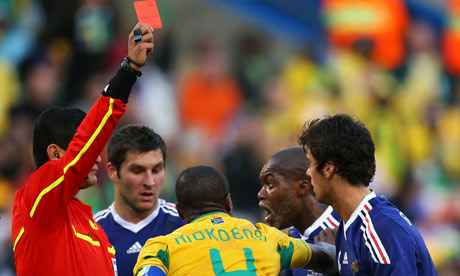
Sven Goran-Eriksson’s negative tactics backfired, as his Ivory Coast side were outclassed by the brilliant Brazilians in Soccer City.  A tame first half came to life, when Sevilla striker Luis Fabiano lashed home an opener.  Fabiano’s second, came through two questionable handballs, blindingly missed by the French referee.  The third goal was a rollback to great Brazilian sides of the past, with Kaka’s dazzling skill and classy through ball playing in Elano for his second of the campaign.  Elano was stretched off moments later, before an unfit Didier Drogba got his country’s first goal of the tournament, heading in with eight minutes remaining.  The match soured in the closing stages, with Kaider Keita using the disgusting ‘playacting’ tactic to get Kaka sent off.  The result ensured the Brazilians passage into the knockout stages. 


Monday 21st June: Portugal 7-0 North Korea
Portugal ripped apart North Korea in Cape Town, recording the 4th biggest win in World Cup history and putting them on the brink of qualification for the knockout phase.  Raul Meireles scored the only goal in the first half, but the Portuguese hit blistering form in the second half, scoring six goals without reply.  Atletico Madrid’s Tiago scored twice, and there were also goals from Simao, a flying header from Hugo Almedia, substitute Lledson and Cristiano Ronaldo, who ended his two-year wait for an international strike.   


Monday 21st June: Chile 1-0 Switzerland
A lively performance from Chile saw the South Americans overcome a stubborn Switzerland in Port Elizabeth and put them on the brink of qualifying for the knockout stages.  Despite breaking a defensive record for the most amounts of minutes without conceding consecutively, the Swiss were on the backfoot from the 28th minute, when West Ham winger Valon Behrami was shown a straight red card for a deliberate elbow.  Despite a host of chances, and a referee who would struggle to handle a game between secondary school children, Chile was restricted to the one goal, scored through a header by ex-Liverpool flop Mark Gonzalez.


Monday 21st June: Spain 2-0 Honduras
A dynamite double from new Barcelona signing David Villa helped put Spain back on track at Ellis Park, after their shock opening loss to Switzerland.  In a performance that was dominant, but not one which will frighten the South American challengers, Spain never looked in trouble against a Honduras side, which don’t have many attacking weapons at the tournament.  Villa’s two goals were both quality individual efforts, though he blotted his copybook with a missed penalty in the second half.

Tuesday 22nd June: France 1-2 South Africa
The hosts left their World Cup in the group stages on a high note, following a battling performance to overcome France, who as a team, have quite simply had a World Cup full of nightmares and catastrophes.  This continued in Bloemfontein, as Yoann Gorcuff was given his marching orders for a flailing elbow midway through the first half.  By then, Bafana Bafana roared two goals clear, courtesy of a header by Bongani Khumalo and a tap-in from Katlego Mphela.  Sadly, they ran out of steam in the second half, and were eliminated on goal difference, with Florent Malouda’s consolation little more than a sobering statistic with Les Bleus.


Tuesday 22nd June: Mexico 0-1 Uruguay
Uruguay sealed top spot in Group A, courtesy of a Luis Suarez header in Rustenberg.  A patchy game, which saw both teams clearly feeling nervous about progression, was only brightened up by the Ajax targetman’s crisp header on 23 minutes.  Despite defeat, Mexico’s goal difference was enough to see the North Americans also progress to the knockout stages for the fifth consecutive finals.

Tuesday 22nd June: Greece 0-2 Argentina
Argentina continued their 100% record, seeing off a Greek side that seemed content to play for the draw, in a game they needed to win.  Only requiring a draw to seal qualification and top spot, Argentina looked cagey, compared to previous outings, but were firmly on top and two goals in the last twelve minutes saw Maradona’s men get the deserved victory.  They came in unlikely sources however, from Bayern Munich centre-back Martin Demichellis and 36-year old veteran striker Martin Palermo.

Tuesday 22nd June: Nigeria 2-2 South Korea
South Korea advanced into the knockout stages for the first time on foreign soil, after gritting out a share of the spoils with Nigeria.  The Super Eagles made the perfect start, in a game they had to win to continue their interest alive, with Kalu Uche tapping in on twelve minutes.  The Asians took firm control in Durban, with goals either side of half time, through Lee Jung-Soo and Park Chung-Yung, the latter being the first player to score a direct free kick at the finals.  Yakubu’s glaring miss summed up the Africans faltering tournament, though the Everton marksman did make up for it, with a penalty after Chinedu Obasi was fouled in the penalty box.  However, Korea held on to book a meeting with Uruguay on Saturday.