HappyDude88's Search

About Me

My photo
Hello, this is Siwri88, better known to some as Simon. Currently work as a picture researcher and product editor with a leading publishing company that works with trading cards and sticker albums on a variety of licenses in sport and entertainment. Freelance Journalist and writing a book in my spare time. Achieved a 2:1 studying BA Hons Journalism at the University of Northampton (2009-2012). Enjoy reading!
Showing posts with label Ayrton Senna. Show all posts

Thursday, 24 November 2011

F1 classic races - Brazil

FOR the final time this season and on this blog, I will be looking back at specific events from previous years of the country about to host a round of the FIA Formula One World Championship.  This time, it will be a bit different, as I charter the history of the Brazilian Grand Prix since it returned to Interlagos in 1990.
        The Brazilian Grand Prix had been staged on the Rio de Janeiro circuit in the 1980s, but returned to a shorter Interlagos circuit in Sao Paulo from 1990 onwards.  To locals, it is better known as the Autodromo Carlos Pace, a Brazilian driver who won his home event in 1975.  Sao Paulo has certainly put on some special events since its return to the Grand Prix calendar.
        Alain Prost won the first event in 1990 after local hero Ayrton Senna ran into the back of backmarker Satoru Nakajima whilst leading.  Senna had never won his home race, but he ended the barren run in 1991.  He started on pole position and spent the majority of the race, fighting off a stiff challenge from the Williams of Nigel Mansell.  A wild spin for Mansell led to a gearbox failure, which was the Achilles heel of that chassis.  With three laps to go, the unpredictable Brazilian weather played its usual wildcard, with Senna waving furiously for the race to be stopped.  Aided to that, he was struggling with a misbehaving gearbox of his own.  Somehow, he finished the race with just one working gear and the McLaren beat Riccardo Patrese by just two seconds.  Cue euphoria and ecstasy in the crowd.  Senna had worked so hard for the victory; he was in intense physical pain and had to be lifted out of his car by paramedics.  He was suffering from cramp in his arms and shoulders.  Undeterred, he stood on the podium to take the top prize and achieve his remaining ambition of winning his home race.  He repeated the feat in 1993, edging out Damon Hill in another wet/dry race.
      For 1994, Ayrton switched to the all-conquering Williams team.  With Mansell away in IndyCars and Prost retired from racing, surely he was going to steamroller a mediocre field and take his fourth championship.  However, the partnership didn’t work out and as we all know, it ended tragically at Imola.  However, it was already in trouble from the outset in Brazil, with the 34-year old clearly unhappy about the nervous handling of the FW16 chassis.  He did drag the machinery to pole position, but that was more down to his brilliance behind the wheel, rather than the car’s competitiveness.  In the race, he spun off and stalled his engine whilst running second on lap 56.  As Michael Schumacher coasted to victory by a full lap, the Brazilian fans heading out of the gates in their droves, unaware that this was the last Brazilian Grand Prix Ayrton Senna had competed in.
        For years afterwards, Brazil had to largely do with pay drivers in the sport, such as Pedro Diniz, Tarso Marques and Ricardo Rosset.  Their only shining light was the talents of Rubens Barrichello and when he moved to Ferrari for the start of the 2000 season, there were high hopes that he might end their long drought for a home winner.  Sadly, Rubens Interlagos jinx continued to strike at Maranello.  Hydraulics failure twice, an accident with Ralf Schumacher in 2001 and a fuel feed problem in 2003 put him on the sidelines, part of an event that will go down as a special race.
       New tyre regulations meant both Michelin and Bridgestone had not brought a full wet tyre to Sao Paulo in 2003 and with the track soaked, the race started behind the Safety Car.  An aquaplaning river at turn three turned that corner into the car version of Beachers Brook at the Grand National.  Juan Pablo Montoya, Jenson Button and Michael Schumacher were among the six victims who crashed out on this corner.  Barrichello looked set for victory, when he passed David Coulthard’s tyre hungry McLaren, but the fuel pressure issue robbed him of a certain triumph.  The incident-packed race was stopped early after almighty accidents for the Jaguar of Mark Webber and Fernando Alonso’s Renault.  Both escaped unharmed, although Alonso needed precautionary checks in an ambulance, so missed the podium ceremony.  The race was initially awarded to the McLaren of Kimi Raikkonen, but a countback error meant Giancarlo Fisichella was rightfully awarded his maiden success five days later in an FIA enquiry into the incidents in Paris.
      Traditionally, Brazil had been one of the early season races, but it moved to a season ending regular from 2004 onwards.  Juan Pablo Montoya secured the final victory for Williams to the present day that year, before Interlagos became the setting for some gripping championship deciders.  Fernando Alonso was crowned champion in 2005, becoming the youngest driver to achieve this in the process.  A year later, he did it again, although this was overshadowed by Michael Schumacher’s final race of his first career, which involved a storming drive back through the field to fourth, after an early puncture.  In 2007, Kimi Raikkonen pinched the championship from under the noses of McLaren’s Alonso and Lewis Hamilton with a season ending victory and in 2009, Jenson Button put in the drive of his life from 14th on the grid to clinch the title with a stirring performance to fifth for newcomers Brawn GP. 
      However, if you want drama, try the 2008 Brazilian Grand Prix, which will go down as one of the most dramatic finishes of all time.  Going into the event, Lewis Hamilton had a seven point lead over local hero, Felipe Massa.  Massa did nothing wrong all weekend, starting on pole position and never looked troubled to take his sixth win of the season in changeable conditions.  Fifth place would have been good enough for Hamilton to take the title in only his second season in the sport, but when he was overtaken by Sebastian Vettel’s Toro Rosso with three laps to go, Hamilton had been relegated to sixth.  For the second successive year, the championship seemed to be slipping away from Hamilton, but the wet weather intensified on the final lap and left Timo Glock’s Toyota stranded on dry tyres.  He was powerless to resist Vettel and Hamilton, who passed Glock into the final corner on the last lap of the season.  Ferrari celebrated, thinking they had won, as did McLaren.  It was the latter who had it right; Hamilton had secured the title in the most sensational fashion possible. 
      This season’s title battle may have been settled a long time ago, but let’s hope Brazil produces another special event this weekend to conclude the 2011 Formula One season.

Tuesday, 18 October 2011

A reminder of motorsport's dangers


IT SAYS it on all the paddock passes and race tickets, motorsport is dangerous.  It’s a fact of life and nothing can be done about that to remove the risk element away.  However, when the unthinkable happens, it still gives the community both a massive shock and a chilling reminder of the dangers in competing at the highest level.  Dan Wheldon’s tragic death in Sunday’s IndyCar finale has not only sent a worldwide feel of loss and remorse, but raised questions about the safety of motorsport in general and what can be done to prevent these sorts of accidents from happening more frequently.

THE SAFETY OF INDYCAR RACING
WRECK: The Las Vegas circuit was too tight for so many cars
INDYCAR’s safety record is good, but not great.  Both Gonzalo Rodriguez and Greg Moore were killed within six weeks of events in 1999.  Paul Dana was the last driver to lose his life at an IndyCar event, five years ago.  Open-wheel racing has always carried significant risks and will continue to do so.  As Mark Blundell summed it up yesterday, the events of Sunday were a ‘recipe for disaster.’  Cars going side-by-side at 220mph has a real fear of danger if something goes wrong.  Plus, it doesn’t have to be driver error; mechanical failure in these cars is still possible in this day and age.  There is no doubt that IndyCar has worked extremely hard with safety organisations to improve its track record, which frankly, was diabolical in the 1990s.  Plus, there are a lot of dedicated marshals and medical facilities are better than ever before.  However, the risks will always remain and in the light of the recent events at the weekend, more has to be done to make the cars stronger to absorb the impacts of a big accident.  1979 Formula One world champion, Jody Scheckter has told BBC that he wants his son, Tomas to quit because it is too dangerous.  Scheckter Jnr was involved in the 15-car pile-up in Las Vegas and Jody said “It is the most dangerous form of motor racing at the moment.  Hopefully this will knock some sense into him and realise there is more to life.  It really isn’t worth it.”

CIRCUITS IN THE US; THE DANGERS
THE officials at the Las Vegas circuit should be prepared for some serious stick over the coming weeks.  The circuit is far too narrow for these types of cars to go racing.  Principally, this track has been used mainly for NASCAR racing, not open-wheel combat.  Drivers raised their concerns during testing for the event, including the defending champion, Dario Franchitti.  If they did this and the track officials ignored their requests for more safety considerations or even to cancel the event, they are going to be in a whole lot of hot water.  A prime example will be Formula One’s fateful trip to Indianapolis in 2005.  Michelin failed to bring suitable tyres to the Brickyard, which saw a farcical six-car race take place.  Two weeks later, Max Mosley said on the Official 2005 F1 DVD; “You can’t just build a chicane at the team’s request, because if an accident happens, an American judge wouldn’t care about the safety consequences.  It is unfortunate what happened, but we couldn’t allow it to happen.”  It is unlikely, but if Franchitti can prove his comments were valid through transcripts or audio recordings, then this tragedy could have been prevented.  I don’t know the full implications of American law, but the Las Vegas track officials could be facing some tough and testing questions from higher forces should this happen.  Although oval racing is popular in the States, maybe it is time to restrict this form of racing to the classic Indianapolis 500.  The risks of racing on ovals are far greater than both street and road circuits.  The thrill may disappear, but at the safety of the championship’s future integrity, it might be the safest option, if not the most plausible option.

WILL IT HAPPEN IN FORMULA ONE?
SAFE: The FIA has done immense work in the safety department
DEATH in Formula One is possible.  It has happened before and without wanting to sound callous, it will probably happen again at some stage.  However, it has now been 17 years since that horrific weekend at Imola, when both Roland Ratzenberger and Ayrton Senna were killed.  The last fatality at any Grand Prix event was Marshal Graham Beveridge; killed by flying debris from a serious crash at the 2001 Australian Grand Prix in Melbourne.  The introduction of the HANS (Head and Neck Safety) system in 2003 has restricted the potential possibility for fatal neck and head injuries.  Ironically, the HANS device came in after successful testing in American racing.  Professor Sid Watkins, Dr. Gary Hartstein and the FIA can take immense satisfaction for the work they have done in recent years.  Who can forget Robert Kubica’s aeroplane shunt in the 2007 Canadian Grand Prix, which would have probably been a fatal shunt ten years earlier, saw Kubica only suffer a sprained ankle and that is down to HANS and the vigorous safety cells and crash tests each car has to pass in pre-season.  1993 IndyCar champion Nigel Mansell praised Formula One’s safety record and told BBC Radio 5 Live, that IndyCars could learn from the premier competition in motorsport; “In Indy racing, there is simply nowhere to go.  When an accident happens, you are into the wall in a split second.  This is why Formula 1 does an exemplary job.  The tarmac runs off so the driver has time to decelerate the car.”

THE COCKPITS: SHOULD THEY BE CLOSED?
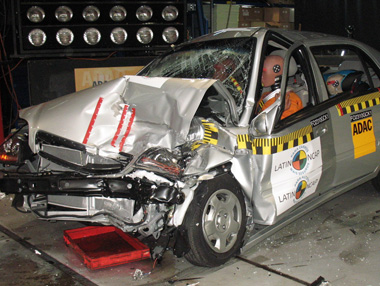
NO IS the simple answer to this.  Dan Wheldon’s death will understandably trigger this debate again, which was raised in 2009 when Henry Surtees died in an F2 race at Brands Hatch after being struck by debris, then Felipe Massa received life-threatening injuries in a similar, freakish incident during qualifying for the 2009 Hungarian Grand Prix.  There is talk of a canopy being installed around the driver and yes, it would be better for a safety issue.  However, there is no guarantee of this being the breakthrough to prevent incidents like those that have happened in the past.  Remember, it was the impact with the wall and the resultant fire that was Dan Wheldon’s downfall on Sunday, not a result of the flying debris.  Like I’ve said, motorsport is dangerous, but I think a real element would be taken away if the cockpits became closed within the driver area.  It isn’t a regular occurrence and any action like this would be seen by me as a desperate action.  IndyCar need to look at better racetracks, safer barriers at these tracks and the structure strength of the cars, rather than changing cockpit levels.

HOW IT HAS AFFECTED ME?
PEOPLE who know me will understand the love of motor racing I have.  I don’t follow American racing, but of course, I want the Brits to do really well in any motorsport they take part in.  First indication of potential trouble came when I saw Jonathan Legard’s status on Twitter, about a big IndyCar accident.  Curious, I checked out YouTube to see how big it was and I wished I hadn’t.  When I saw the crash, it felt like my heart stopped beating and you don’t want to hear the words that muttered out of my mouth when I witnessed it online for the first time.  When I saw another of Legard’s tweets in the evening, which said that Dan Wheldon’s condition was serious, with no word on injuries, I knew the situation looked very bleak and sadly, the news came through just before midnight of his death.
      Yesterday, I kept seeing the crash on news broadcasts and I felt there was no need for that, especially for Dan’s devastated family.  In this situation, I would stick to images and videos of the wrecked cars and driver reactions.  It made me sick watching it everytime.  All day at Uni yesterday, it was a talking point with a lot of the journalism students and I just didn’t want to be there.  It was on my mind all day and maybe some will say; ‘Why does it affect you?’  Well it does and I can’t help that.  I had to show the crash to one of my friend’s yesterday afternoon and seeing it again made me feel like, well rubbish in the politest term possible.  As Dan was British, plus he grew up in my hometown of Milton Keynes, it made it even worse to think about.  Thankfully, I don’t remember Ayrton Senna’s death vividly, so this is the first real motorsport tragedy I have seen and it puts perspectives into life.  We still have the basics, can move around and look forward to a potential promising future.  I won’t stop watching motor racing, such as Formula One, but I will certainly appreciate the risks far more than I did and actually, I will probably feel more different when watching the next event on TV because I fully understand the risks and consequences of what might happen if it goes horribly wrong.

Motorsport is dangerous and Sunday’s tragedy in Las Vegas is a reminder for everyone; drivers, fans, marshals, racing organisations etc to not take anything for granted.  It is a wake-up for the whole community and safety must continue to advance in all forms, so these sorts of tragedies such as Dan Wheldon’s accident can be prevented more in future.

Dan Wheldon – 22 June 1978 – 17 October 2011, RIP

Wednesday, 27 July 2011

F1 classic races - Hungary


IN A new series, I will be looking back at six classic races every weekend from the country about to stage an event in the 2011 FIA Formula One World Championship.  This is my selection, of races in Hungary between 1991 and 2010.  Enjoy the archive!

1992
FINALLY: Mansell achieves his goal, although Senna won the race
WINNER: Ayrton Senna (McLaren Honda), 2nd: Nigel Mansell (Williams Renault), 3rd: Gerhard Berger (McLaren Honda)
ONE man dominated the 1992 world championship, but it was a charging drive that earnt Nigel Mansell his coveted crown.  Starting second behind team-mate Riccardo Patrese, Mansell made a bad start, dropping behind both McLaren’s of Ayrton Senna and Gerhard Berger.  He fought back past Berger and when Patrese spun off, the championship looked secure.  However, a puncture forced Nigel into the pits and back down to sixth spot.  Catching Senna was a forlorn task, but ‘Our Nige’ ensured he fought for his title.  First, Michael Schumacher was catapulted off the road when his rear wing flew off in the direction of Budapest airport!  The Lotus of Mika Hakkinen and Martin Brundle were easily dispensed with and finally, a bullish pass on Berger got Mansell back into second spot, even when third was enough for the title.  After many near-misses, Nigel had done it at last!

1997
WINNER: Jacques Villeneuve (Williams Renault), 2nd: Damon Hill (Arrows Yamaha), 3rd: Johnny Herbert (Sauber Petronas)
THE Damon Hill/Arrows combination always looked like it would fail and so it did; but for one magical weekend in Hungary.  The world champion recaptured his 1996 form to qualify his underpowered chassis in third spot.  Hill jumped past Jacques Villeneuve into the first corner and then sensationally overtook Michael Schumacher’s Ferrari on lap 11 into the first corner.  Blistered tyres and a spare chassis finished Schumacher’s podium chances and he wasn’t the only one suffering.  Giancarlo Fisichella spun off trying to pass the Ferrari; Mika Hakkinen lost engine power on his McLaren and Heinz-Harald Frentzen’s bad luck continued when the fuel filler cap refused to open at his pitstop.  After seeing off the threat of David Coulthard, Villeneuve pursued in vain, but cruel luck was about to strike.  Hill’s throttle started cutting out with three laps to go, leaving him a sitting target.  On the last lap, Villeneuve used the grass on the exit of turn three to steal victory from Damon’s deserved grasp.  Johnny Herbert came home in an excellent third for Sauber.

1998
WINNER: Michael Schumacher (Ferrari), 2nd: David Coulthard (McLaren Mercedes), 3rd: Jacques Villeneuve (Williams Mecachrome)
HALFWAY through the 1998 race and Michael Schumacher’s world championship hopes looked to be in tatters.  The McLaren’s were walking away into the distance and Schumacher was struggling to pass Jacques Villeneuve’s Williams Mecachrome.  Ross Brawn came up with an absolute masterstroke and brought Schumacher in for an early second stop, turning his race into a three-stopper.  His searing pace was unleashed and when the McLaren team tried to respond, they crucially lost track position.  Even a brief excursion onto the grass on lap 52 couldn’t halt Schumacher’s charge and he started lapping three seconds quicker than anyone else.  By lap 60, his advantage was sufficient enough to pit for the third time and retain his lead.  Mika Hakkinen’s challenge faded thanks to a faulty shock absorber, which relegated the Finn to a lapped sixth, behind David Coulthard, Villeneuve, Damon Hill’s Jordan and a flu-ridden Heinz-Harald Frentzen.  Even today, this remains one of Michael Schumacher’s greatest ever victories.

2001
WINNER: Michael Schumacher (Ferrari), 2nd: Rubens Barrichello (Ferrari), 3rd: David Coulthard (McLaren Mercedes)
THIS was nowhere near a classic, but it was a title clincher.  David Coulthard had to beat Michael Schumacher to stand any hope of launching a title fightback.  It became ever more unlikely when Schumacher lapped 0.7secs quicker than anyone else in qualifying.  He took off at the start and wasn’t seen for the remainder of the afternoon.  The main scrap was between Coulthard and the second Ferrari of Rubens Barrichello.  DC lost out at the start to the Brazilian, but slick McLaren pit work got the Scot out ahead in the first round of pitstops.  However, Ferrari turned the tables at the second stops and Barrichello leapfrogged ahead again.  The path was clear for Schumacher to take his seventh win of the season, his fourth world drivers’ championship and to equal Alain Prost’s record of 51 GP victories.  With Barrichello second, the constructor’s championship was also sealed in Ferrari’s favour, having scored nearly double the points of nearest rivals McLaren.  For Ferrari, it was the perfect day and years of Maranello domination were well and truly underway.

2003
WINNER: Fernando Alonso (Renault), 2nd: Kimi Raikkonen (McLaren Mercedes), 3rd: Juan Pablo Montoya (Williams BMW)
THE remarkable Fernando Alonso had gone off the boil in mid-season and Jarno Trulli had outpaced him in the last three events.  When Trulli went quickest in Friday’s qualifying session, with Alonso down in sixth, it looked like we were in for more of the same.  However, Alonso stormed to pole position on Saturday and never looked back.  He was massively helped by Mark Webber’s much slower Jaguar getting into second position in a chaotic start.  Webber held up the rest of the opposition, allowing Alonso to build up a 30 second cushion in the first 15 laps.  Rubens Barrichello’s championship challenge ended when he suffered a calamitous rear suspension failure.  After spinning at the second corner, Ralf Schumacher produced a stirring fightback to fourth position, but his title chances also looked dead and buried.  This was because his team-mate, Juan Pablo Montoya survived a scrappy spin in the closing stages to finish third.  Kimi Raikkonen was an excellent second and it set the championship up for a grand finale, especially as Michael Schumacher qualified and finished a very distant and lapped eighth.  At least he started; Ralph Firman fractured his heel and missed the race after a terrible crash in practice, but this was Alonso’s weekend, as he stole Bruce McLaren’s record to become the youngest ever Formula One winner.  That was until a young German called S. Vettel came on the horizon of course!

2006
WINNER: Jenson Button (Honda), 2nd: Pedro de la Rosa (McLaren Mercedes), 3rd: Nick Heidfeld (BMW Sauber)
BOTH Fernando Alonso and Michael Schumacher entered the race with grid penalties.  Alonso had been penalised for brake-testing Robert Doornbos in Friday practice, whilst Schumacher overtook Alonso and new BMW driver Robert Kubica under red flags on Saturday morning.  On a wet day, the unpredictable took place.  Alonso produced a great drive and looked set to win from 15th on the grid.  However, a wheel nut came loose after his second pitstop, which left him spinning helplessly into the barriers.  Schumacher couldn’t take advantage though; retiring with suspension damage after minor contact with Nick Heidfeld with just three laps remaining.  Kubica’s later disqualification still earnt the German a fortunate point.  All this opened the door for Jenson Button to storm through from 14th on the grid to claim his first Grand Prix victory.  Pedro de la Rosa was a notable second for McLaren, recording his first podium finish.

Thursday, 23 June 2011

The Senna movie - A fitting tribute


By Simon Wright (Personal Review)


ON TUESDAY lunchtime, I went to the cinema to watch a motor racing movie about one of my heroes, who really appealed to me, Ayrton Senna.  When The Senna Movie was announced for commission at the beginning of last year, I was looking forward to seeing the final piece of work.  Senna’s life, both on and off the racetrack was certainly full of theatre and deserved the proportions of a movie on a big screen.
     Ayrton Senna was only 34 years old when he was killed, crashing into a concrete wall on the Imola circuit during the 1994 San Marino Grand Prix.  Although I’d heard a lot of positive reviews about the movie from motorsport experts, commentators and from the Senna family themselves, I did hope this would be a moving that would give depth to his life and be a fitting tribute.  Maybe it was concern from The Social Network, which showed how Facebook was created, but struggled to appeal to me when I saw it in November last year, but I was hoping that The Senna Movie wouldn’t go down a similar route.  My plaguing doubts turned out to be completely whittled away.
     When I came out from the film, I realised that I had witnessed a piece of sporting drama in the big screen that had really captured the imagination.  Even being a motorsport fan, I saw some never-before-seen footage and learnt more about the great Brazilian’s life.  The main focus point of the movie was the two controversial clashes with Alain Prost at the Suzuka circuit which decided the 1989 and 1990 world championships.  I saw footage of the driver’s briefings from both years which were very interesting.  In 89, Senna looked a serious figure, one who seemed to be fed up with the politics already before the Japanese event.  Prost seemed far more relaxed about the whole situation.  That was surprising, considering it was Prost who couldn’t cope with Ayrton’s attitude and had already decided to quit the McLaren team at the end of the season.  A year later, Senna looked even more fed up with the politics in the sport, especially against the controversial FISA president Jean-Marie Balestre.  He was convinced that Balestre was cooperating with his fellow countryman Prost for the championship both seasons.  In 1990, Senna walked out of the drivers briefing after Nelson Piquet raised a controversial point about the chicanes at Suzuka and he was furious that the other drivers agreed with Piquet, who disliked Senna anyways.  When pole position was refused to be moved onto the cleaner side of the grid, the consequences became inevitable for the tangle in the first corner.
SMASH: This crash led to another clash between Senna and Balestre
     A year later, Senna clashed again with Balestre, this time over chicanes at the German circuit, Hockenheim.  Ayrton had escaped unharmed from a spectacular crash in practice for the Mexican Grand Prix, which had been made worse by the lack of absorption from the tyre barriers.  He was furious to find tyre stacks put at the end of the three long straights on the Hockenheim track.  He bickered with Balestre, insisting that cones should be used in place for safety.  This time, the other drivers agreed with the world champion and it is believed that this confrontation of views led to Balestre’s downfall and eventual departure as FISA president.
     Senna’s death at the 1994 San Marino Grand Prix rocked not just the world of Formula One and sport, but the worldwide news, which showed the significant impact he had on the sport.  His country Brazil went into national mourning.  Brazil was going through some difficult times and alongside Pele, Ayrton Senna gave them a glimmer of hope and belief that united a country full of divisions.  Watching Senna in the movie on that Imola weekend was sad.  He never smiled on the weekend and looked to be occupied with other matters.  It was interesting to see new camera angles of the terrifying startline crash which saw spectators injured, Ayrton’s reaction to Roland Ratzenberger’s fatal accident on the Saturday, his fury at how slow the Safety Car was going whilst the debris was being collected up, moments before his demise. 
     I was only five when Ayrton Senna was killed.  I remember fuzzily watching some of the race on Eurosport, although I can’t honestly remember the accident.  However, Senna was one of my inspirations in life and his legacy on the sport will never be forgotten.  Ironically, another of my inspirational figures in Nelson Mandela, who at the time, was being sworn in as the president of a previously divided South Africa.  He is still missed, even 17 years on from the tragic accident.
     The Senna Movie is a chilling, emotional and passionate piece of theatre and I’d urge everyone, even those who don’t have any following with motorsport to watch the movie.  It is very powerful and a fitting tribute to a Brazilian legend.   

Wednesday, 22 June 2011

F1 classic races - Europe


IN A new series, I will be looking back at six classic races every weekend from the country about to stage an event in the 2011 FIA Formula One World Championship.  This is my selection, of races held under the banner of the European Grand Prix, largely at the Nurburgring, with servings from Jerez and Donington Park between 1993 and 2010.  Enjoy the archive!

1993 (Donington Park)
EFFORTLESS: Senna completes 'The Greatest Lap Ever,' passing Prost
WINNER: Ayrton Senna (McLaren Ford), 2nd: Damon Hill (Williams Renault), 3rd: Alain Prost (Williams Renault)
AYRTON Senna’s greatest drive came on a damp and soggy Easter weekend in 1993.  The Brazilian started fourth on the grid and got crowded out at the start, dropping to fifth.  Unbelievably, he took the lead by the end of the first lap in the ‘Greatest First Lap’ ever driven.  First, he slipped down the inside of Michael Schumacher into Redgate and then drove around the outside of Karl Wendlinger’s Sauber at the tricky Craner Curves.  After a couple of fantastic corners, he muscled his way past Damon Hill and went after Alain Prost, edging past Prost in the Melbourne Hairpin section.  He went on to win by a full minute.  Wendlinger was taken out on the first lap by a hopeless Michael Andretti whilst Prost made seven comical pitstops on his way to third.  He only got the podium after Rubens Barrichello cruelly stopped with four laps to go; his Jordan starved of fuel pressure when a rostrum in just his third ever race was on the cards.

1995 (Nurburgring)
WINNER: Michael Schumacher (Benetton Renault), 2nd: Jean Alesi (Ferrari), 3rd: David Coulthard (Williams Renault)
THIS was the day when Michael Schumacher virtually wrapped up his second championship with a stunning drive, that even Damon Hill couldn’t complain with.  On a day when Hill needed to win, he drove appallingly.  He made a bad start and then blew his chances by trying an ambitious lunge on Jean Alesi which saw the Williams front wing removed.  Recovering and chasing down team-mate David Coulthard, Hill lost control on lap 59 and smashed into the tyres.  Alesi had been brave enough to start on slicks on a damp track and led from the 11th lap onwards.  However, he struggled to hold off a quicker Schumacher on worn rubber and with four laps to go, the German made an aggressive move in the final chicane which looked risky, but paid off.  Alesi backed off and Schumacher went on to record his eighth win of a sensational 1995 season. 

1997 (Jerez)
WINNER: Mika Hakkinen (McLaren Mercedes), 2nd: David Coulthard (McLaren Mercedes), 3rd: Jacques Villeneuve (Williams Renault)
THE title decider in 1997 was between Michael Schumacher and Jacques Villeneuve.  Schumacher was one point ahead heading to Jerez, and the title rivals started on the front row together after an unbelievable qualifying session that saw Villeneuve, Schumacher and Heinz-Harald Frentzen set the same exact time of 1.21.072!  At the start, Villeneuve got Wheelspin and dropped to third behind the two Germans.  Frentzen let Jacques go on lap nine, allowing the Canadian to closedown Schumacher’s 4.1second advantage.  On lap 47, the Williams driver made his move into the Dry Sac bend.  He slithered down the inside, as Schumacher made a blatant attempt to turn in on his title rival.  It was significant contact, but Villeneuve continued, whilst the Ferrari rebounded into the gravel trap and out of the race.  The Williams was damaged and Villeneuve backed off dramatically on the last lap, to allow the McLaren’s of Mika Hakkinen and David Coulthard through, as he only needed fifth for the title.  Consequently, this meant that Hakkinen won his first race in Formula One, at his 96th attempt.  Schumacher was blamed and vilified for the collision with Villeneuve and got a fine and expulsion from the final 1997 driver’s championship table for his actions.

 
1999 (Nurburgring)
WINNER: Johnny Herbert (Stewart Ford), 2nd: Jarno Trulli (Prost Peugeot), 3rd: Rubens Barrichello (Stewart Ford)
JOHNNY Herbert gambled correctly in an ever-changing race which left the world championship wide open and gave the Stewart team their maiden victory, before Jaguar took over in the year 2000.  The race started dramatically, when Alexander Wurz, attempting to avoid Damon Hill’s slowing Jordan, clipped Pedro Diniz’s Sauber.  The Brazilian was launched into a terrifying barrel roll, which saw the rollover hoop collapse, but Pedro escaped unharmed.  Heinz-Harald Frentzen saw his title hopes die as his Jordan coasted to a sudden halt out of the pits, whilst leading.  David Coulthard also lost his championship chances by chucking his McLaren off the road in wet conditions.  Giancarlo Fisichella was another leader who spun off and a puncture ruined Ralf Schumacher’s hopes of a maiden victory after he had driven faultlessly.  Herbert had only started 14th, but was on the right tyres at the right time to win.  Prost earnt their best ever result, courtesy of Jarno Trulli, as title rivals Mika Hakkinen and Eddie Irvine floundered in fifth and seventh places.  Irvine wasn’t helped by a cataclysmic pitstops when the mechanics only put three wheels on his car!

2005 (Nurburgring)
WINNER: Fernando Alonso (Renault), 2nd: Nick Heidfeld (Williams BMW), 3rd: Rubens Barrichello (Ferrari)
A LAST lap grandstand finish was set-up by a seriously vibrating tyre on Kimi Raikkonen’s leading McLaren.  Raikkonen led from the start, but made a mistake at half-distance and took a trip across the gravel, which gave Nick Heidfeld a brief lead.  Later in the race, Kimi flat-spotted his tyre badly lapping Jacques Villeneuve’s Sauber, which allowed Fernando Alonso close right up on the McLaren.  As tyre changes were not permitted in 2005, the Finn had to battle on, but as he begun lap 60 (the final lap), the front suspension collapsed under extreme stress and pitched Raikkonen off the circuit at turn one.  Alonso was left to collect the unlikely spoils and strengthen his grip on the world championship.  Three-stopping Heidfeld and Rubens Barrichello were promoted onto the podium, whilst a pitlane speeding penalty cost David Coulthard a rostrum; he finished fourth for Red Bull.  A first-lap accident took out Mark Webber in the second Williams and spun Juan Pablo Montoya down to a distant seventh place finish.  So, it was a black day for McLaren and a pivotal day in the world championship battle of 2005.

2007 (Nurburgring)
WINNER: Fernando Alonso (McLaren Mercedes), 2nd: Felipe Massa (Ferrari), 3rd: Mark Webber (Red Bull Racing Renault)
FERNANDO Alonso overcame severe thunderstorms and a strong Ferrari challenge to claim a much-needed victory in 2007.  The race build-up was dominated by a serious accident for Lewis Hamilton in qualifying, caused by a faulty wheel gun.  Although he spent the night in hospital, Hamilton was allowed to start from tenth on the grid, but he ended up having a bad day.  First, he collected a puncture when the BMW Sauber drivers of Nick Heidfeld and Robert Kubica stupidly collided on the second corner of the race.  Next, he went off at the first corner in conditions more akin to a swimming pool flood!  The monsoon downpour claimed Jenson Button, Adrian Sutil, Nico Rosberg, Scott Speed and Vitantonio Liuzzi and Hamilton lost a lap sitting in the gravel.  The race was suspended until conditions improved, which left Marcus Winkelhock, a one-off replacement for the sacked Christjian Albers in the Spyker team, in the lead.  Winkelhock was soon gobbled up by the quicker cars however.  Kimi Raikkonen retired with a hydraulic failure and a bad tyre choice left Hamilton stranded in ninth.  Alonso hunted down Felipe Massa and passed the Brazilian with three laps to go to claim a sensational and dramatic victory.  Mark Webber finished third for Red Bull.

Thursday, 26 May 2011

F1 classic races - Monaco

IN A new series, I will be looking back at six classic races every weekend from the country about to stage an event in the 2011 FIA Formula One World Championship.  This is my selection, of races in Monaco between 1991 and 2010.  Enjoy the archive!

1992
DRAMATIC: Senna's slower McLaren holds off Mansell in 1992
WINNER: Ayrton Senna (McLaren Honda), 2nd: Nigel Mansell (Williams Renault), 3rd: Riccardo Patrese (Williams Renault)
NIGEL Mansell was aiming to become the first driver since the days of Alberto Ascari in the 1950s to win six races in a row.  He dominated this race from pole position, until he collected an unfortunate puncture with seven laps to go.  Ayrton Senna inherited the lead, but Mansell quickly caught up to the McLaren Honda and drove all over the road, in a desperate attempt to overhaul the Brazilian.  Senna made his car the widest possible around, and despite doing all he could, Mansell couldn’t find a way past.  Ayrton securing his fifth win in six Monaco Grand Prix’s.  It was a belting finish.

1996
CHAMPAGNE: Panis, Coulthard and Herbert spray the bubbly
WINNER: Olivier Panis (Ligier Mugen Honda), 2nd: David Coulthard (McLaren Mercedes), 3rd: Johnny Herbert (Sauber Ford)
THIS was the race which should have the title ‘Last Man Standing.’  21 started, only four finished!  The drama on a greasy track surface started when Jos Verstappen, the only man stupid enough to start on slick tyres, slid straight into the St. Devote barriers.  Moments later, world champion Michael Schumacher made a rare error and hit the wall at Portier.  Damon Hill led from the start and was miles ahead of anyone else when his Williams Renault blew up in the tunnel on lap 40, leaving Damon devastated.  This promoted Jean Alesi into the lead, but a wheel bearing stopped his Benetton in the pits.  The second Williams of Jacques Villeneuve was never a factor in the victory chase, but was taken out by the hopeless Forti of Luca Badoer.  All of this drama saw Olivier Panis come through from 14th on the grid to secure a gigantic triumph for the fading Ligier Mugen Honda team.  Brits David Coulthard and Johnny Herbert, plus the other Sauber of Heinz-Harald Frentzen were the only other finishers.

1997
WINNER: Michael Schumacher (Ferrari), 2nd: Rubens Barrichello (Stewart Ford), 3rd: Eddie Irvine (Ferrari)
WILLIAMS took a mad pill before this race, chucking away their qualifying advantage.  On a wet circuit, the team elected to start pole man Heinz-Harald Frentzen and Jacques Villeneuve on slick tyres.  Michael Schumacher drove past the pair at the start, and went on to produce a Monaco masterclass.  Schumacher was a phenomenal 21 seconds clear of Giancarlo Fisichella’s Jordan by the end of lap five.  Villeneuve gave up the chase by smacking the rear corner of his car against the wall at St. Devote, whilst behind lapped by Schumacher on lap 16.  Frentzen struck the wall in the chicane, whilst running a lonely 9th.  Despite a quick trip down the escape road in the worsening conditions, Schumacher won the race by country miles.  Rubens Barrichello produced a stunning drive from tenth on the grid to score a brilliant second place for the new Stewart Ford outfit, leaving Jackie Stewart full of emotion.  Eddie Irvine made it a great day for Ferrari, with the final podium position, ahead of 1996 winner Olivier Panis and Mika Salo, who claimed Tyrrell’s final ever world championship points by not coming into the pits at all during the timed out 62 laps.

2002
WINNER: David Coulthard (McLaren Mercedes), 2nd: Michael Schumacher (Ferrari), 3rd: Ralf Schumacher (Williams BMW)
FERRARI and Michael Schumacher were reeling from the team orders scandal that hit F1 after the Austrian race two weeks earlier.  In Monaco, the unbeatable F2002 was beaten for the only time in the 2002 season.  Schumacher qualified third, and couldn’t find a way past David Coulthard.  Coulthard blasted past Juan Pablo Montoya off the start, survived a technical gremlin at half-distance and benefited from a upgraded package by McLaren to hold off a feisty challenge from Schumacher.  Montoya couldn’t respond, as his Williams BMW suffered a total engine failure.  Ralf Schumacher salvaged third place for the team, despite a late pitstop to replace a delaminated tyre.  The other Ferrari of Rubens Barrichello had a clumsy afternoon, which included a collision with Kimi Raikkonen and a drive-through penalty for speeding in the pits.  Barrichello ended out of the points in seventh position, behind Heinz-Harald Frentzen, who scored the final ever world championship point for the Arrows team, before they folded later in the season.

2005
WINNER: Kimi Raikkonen (McLaren Mercedes), 2nd: Nick Heidfeld (Williams BMW), 3rd: Mark Webber (Williams BMW)
A STUNNING stint after a Safety Car saw Kimi Raikkonen clinch his first and ultimately, only triumph around the streets of Monte Carlo.  Raikkonen took pole position, benefiting massively from one of his main rivals on the weekend, Juan Pablo Montoya, being sent to the back of the grid for causing a Saturday morning accident between David Coulthard, Ralf Schumacher and Jacques Villeneuve.  It looked like McLaren had thrown away Raikkonen’s clear advantage, by not pitting him during a Safety Car period.  It was caused after Christjian Albers spun his Minardi, causing a blockage at the Mirabeau hairpin, which ended with Coulthard being, ran into the back of Michael Schumacher, terminating the Scot’s challenge.  However, Raikkonen produced a series of searing laps when racing resumed, pulling away from Fernando Alonso, who was struggling with heavy rear tyre wear.  Despite his best efforts, Alonso couldn’t resist the faster Williams of Nick Heidfeld and Mark Webber, but still finished fourth, to keep a significant championship lead.  Michael Schumacher didn’t make many friends in Monaco 2005.  Coulthard was furious with his retirement, and then he passed Rubens Barrichello, who was unhappy with the strong move on the last lap by his team-mate.  To compound matters, a strong attempt at passing brother Ralf on the start-finish straight, nearly put the Toyota in the barrier.

2008
RECOVERY: Hamilton won in 2008, dream result after an early scrape
WINNER: Lewis Hamilton (McLaren Mercedes), 2nd: Robert Kubica (BMW Sauber), 3rd: Felipe Massa (Ferrari)
LEWIS Hamilton followed in the footsteps of his hero, Ayrton Senna, by recovering from a careless slap with the barriers in the early exchanges to win in 2008.  The Hamilton family felt they had been robbed of victory in 2007 by McLaren team orders.  Lewis rewrote the wrongs of 07, but he got lucky, after striking the wall at Tabac on lap six, left him with a puncture.  McLaren switched his strategy at that point, and combined with stunning driving and a drying track, it changed the race.  Robert Kubica and Felipe Massa put in gritty performances to complete the podium, but Adrian Sutil was cruelly robbed of a deserved fourth place, when his Force India was rammed at the chicane by a out-of-control Kimi Raikkonen.  For his part, Raikkonen ended up out of the points, which started the disintegration of his world championship defence.

Saturday, 21 May 2011

F1 classic races - Spain


IN A new series, I will be looking back at six classic races every weekend from the country about to stage an event in the 2011 FIA Formula One World Championship.  This is my selection, of races in Spain between 1991 and 2010.  Enjoy the archive!

1991
WINNER: Nigel Mansell (Williams Renault), 2nd: Alain Prost (Ferrari), 3rd: Riccardo Patrese (Williams Renault)
F1’s first visit to Barcelona came in September 1991.  It will be remembered for one of the most iconic pictures in Grand Prix history.  Championship rivals Nigel Mansell and Ayrton Senna went wheel-to-wheel down the long start-finish straight, wheels almost touching sparks flying at nearly 200mph.  Mansell went onto claim the place from Senna and in a race he needed to win, to keep his slim championship hopes alive, did so.  Senna spun in the last corner, then struggled with fuel consumption and limped home a disappointed 5th.  Pole-sitter Gerhard Berger dropped out with engine problems and with Michael Schumacher also spinning away a possible podium chance in only his fourth Grand Prix start, Alain Prost came through from 15th at the end of lap one to finish second.  This was because he took the brave decision to start the race on dry tyres on a damp circuit.  However, this was the day when two true Grand Prix legends refused to back down and gave the neutrals a spectacular moment to remember, that is still talked about today.

1994
WINNER: Damon Hill (Williams Renault), 2nd: Michael Schumacher (Benetton Ford), 3rd: Mark Blundell (Tyrrell Yamaha)
FOUR weeks after Ayrton Senna’s tragic accident at Imola, Damon Hill gave the whole Williams Renault team a huge boost, with a great victory.  Hill capitalised fully on a rare technical glitch on the formerly invincible Benetton Ford of Michael Schumacher to claim his fourth F1 win.  Schumacher dominated qualifying and disappeared in the early stages with a series of blistering early laps.  However, the young German hit trouble shortly after his first pitstop, when he got stuck in fifth gear for the rest of the race.  Incredibly, he still finished second, less than 20 seconds behind.  Late engine failures for JJ Lehto and Martin Brundle handed Mark Blundell a shock podium finish, ultimately the last time we’d see a Tyrrell on a Formula One podium.

1996
WINNER: Michael Schumacher (Ferrari), 2nd: Jean Alesi (Benetton Renault), 3rd: Jacques Villeneuve (Williams Renault)
FORCEFUL: Schumacher passes Villeneuve on his way to victory
IN THE torrential rain of Spain 1996, Michael Schumacher proved again just why he was the best.  Schumacher destroyed the competition to win the Spanish event by over a full minute from Jean Alesi.  The 1996 Ferrari was not a good car, but Schumacher could still produce drives that would startle anyone, and this was a prime example.  Rookie Jacques Villeneuve did well to finish third, in a race that saw just six of the 20 cars finish the race.  Retirements included Rubens Barrichello, robbed of a certain podium by a clutch failure on his Jordan Peugeot and Damon Hill, who spun three times in the first 11 laps, and ultimately – ended his race by crashing into the pitwall.  Hill could only watch on in awe of his main rival’s total exhibition of driving in such foul conditions to record his first of what would be many victories at the wheel of the Scuderia.

1997
WINNER: Jacques Villeneuve (Williams Renault), 2nd: Olivier Panis (Prost Mugen Honda), 3rd: Jean Alesi (Benetton Renault)
TYRES were the main factor in the outcome of the 1997 event on the Circuit de Catalunya and nearly saw a giantklling upset.  Had it not been for Eddie Irvine’s inability to use his mirrors whilst being lapped, Prost and Olivier Panis might well have won this event.  Panis only started 12th, but his more durable Bridgestone tyres and solid Prost chassis saw him charge through the field.  This came on a day where Heinz-Harald Frentzen squandered a front row starting position and finish in a very poor 8th for Williams.  To make Frentzen look even worse, his team-mate Jacques Villeneuve was easier on his Goodyear tyres and went onto take the chequered flag, though if it hadn’t been for Irvine’s ignorance, he probably would have limited defence against the charging Panis.  Two weeks later, Panis season and career effectively ended with two broken legs in a sickening crash during the Canadian Grand Prix.  Jean Alesi scored a much-needed rostrum for Benetton, as Michael Schumacher and David Coulthard, suffered significantly from the abrasive track surface, which destroyed their tyres.  Schumacher salvaged fourth, whilst Coulthard was overtaken by Johnny Herbert on the last lap and had to settle for a disappointing sixth.

2001
WINNER: Michael Schumacher (Ferrari), 2nd: Juan Pablo Montoya (Williams BMW), 3rd: Jacques Villeneuve (BAR Honda)
SOMETIMES, sport can be just utterly cruel for no particular reason.  Mika Hakkinen was the victim of this fate in 2001.  In the first event since traction control and launch control devices were allowed back into the sport, the Flying Finn was in complete command.  He followed Michael Schumacher’s Ferrari closely through the first two stints and then took the lead at the final round of pitstops.  Although helped by a strange vibration from Schumacher’s Ferrari, Hakkinen proceeded to pull out a minute advantage, having lapped the entire field.  Then, on the last lap, his clutch packed up through turn three.  It exploded three corners later, leaving the ailing McLaren on the side of the grass.  You just had to feel for Hakkinen, and even Schumacher had to console his rival afterwards.  Michael knew how lucky he had really been on this day.  David Coulthard was a victim of the new technology and started from the back of the grid.  He recovered to fifth, but was accused by Ron Dennis of suffering ‘brain fade’ afterwards.  This allowed Juan Pablo Montoya to collect his first points in Formula One, with a second place drive, and Jacques Villeneuve to earn the first podium in F1 for the BAR Honda outfit.

 
2003
WINNER: Michael Schumacher (Ferrari), 2nd: Fernando Alonso (Renault), 3rd: Rubens Barrichello (Ferrari)
BEFORE 2003, Spain was never interested in Formula One.  Crowds were mundane at Barcelona and little interest was credited until Fernando Alonso turned up.  His fans from his native Oviedo descended on Barcelona and saw the youngster push Michael Schumacher all the way.  Schumacher held on to win on the debut of the new F2003-GA, but Alonso won the plaudits of many for his outstanding drive.  Kimi Raikkonen’s championship lead was cut, after he pressed ‘self-destruct’ on the grid and clattered into Antonio Pizzonia’s Jaguar on the grid, whilst David Coulthard tangled with fellow Brit Jenson Button and ended in the gravel pit, making it a miserable day for McLaren.  Although Schumacher had taken the expected victory, this was the day when everyone sat up and took notice of Fernando Alonso’s ability as a Grand Prix racing driver.

Thursday, 28 April 2011

Remembering Roland


FOR the families of Ayrton Senna and Roland Ratzenberger, it doesn’t matter how long it has been since their tragic deaths.  It could have been one, ten or seventeen years.  However, as the 17th anniversary approaches on their deaths – I felt I would take the opportunity to remember the forgotten man of that ghastly weekend at Imola.
     The 1994 San Marino Grand Prix will go down as the most horrific weekend in the 61-year history of Formula One racing.  Two drivers and a race spectator were killed, four pitlane mechanics were injured by a loose wheel, other fans were struck by flying debris from a startline accident and Rubens Barrichello was lucky to cheat death in a spectacular crash during Friday’s official qualifying session.  Whilst everyone understandably remembers the accident of Ayrton Senna and his legacy on the sport, it is difficult not to forget the impact Ratzenberger had on the sport – even though it was a very brief Grand Prix career.
     Roland Ratzenberger was born in Salzburg, Austria on July 4, 1960.  Although the official records show this was his date of birth, Roland claimed that he was born in 1962 – in an attempt to help further his opportunities into motorsport.  He began racing in 1983 in the German Formula Ford series and finished second in the 1985 Formula Ford festival at Brands Hatch.  A year later, his presence on the car racing scene first came to serious attention as he returned to Brands Hatch, to win the prestigious festival.  It was clear that although he never looked like one of those racing drivers who would take your breath away, Ratzenberger had some quality and it is no accident for anyone to win these kinds of junior events.  
STALLED: Roland's British F3 career halted his momentum
    Two campaigns in the British Formula 3 Championship followed, but they bought little reward.  12th placed finishes in both championship years meant the Austrian’s career had suddenly got bogged down.  He spent time racing for BMW in the World Touring Car Championship and the British Touring Car Championship – but as the 90s dawned, Roland Ratzenberger’s dream of reaching his ultimate goal – Formula One, were all but over.
     Although it wasn’t quite what he was hoping for, Roland was still determined to continue on his quest to join the Grand Prix paddock.  He was a very popular guy in any championship he contested and was friendly with most drivers, developing close friendships with JJ Lehto and Heinz-Harald Frentzen in his junior days.  Ratzenberger seemed to have settled on a successful career in sportscar racing.  He had five cracks at the famous Le Mans 24 Hours race, finishing fifth for Toyota in 1993.  Toyota had also resigned him for the 1994 assault on the event, but sadly, he would never make that destination.  Ratzenberger also worked out a successful career in Japanese F3000, racing against the likes of Eddie Irvine and former Indy 500 winner Jacques Villeneuve.  Again, Roland’s results were mixed, but that also was down to some of the equipment he had, rather than lack of driver skill.  A victory in the Suzuka round of the series in 1992 certainly caught the eye of some on the European circuit, especially as he still insisted that Austrian journalists should cover events that didn’t appeal to them.
BIG BREAK: Roland's pursuit of his F1 dream came true in 1994
     In 1994, Roland Ratzenberger’s dream of racing in Formula One finally came to fruition.  He held off competition from the experienced veteran Andrea de Cesaris to become the second driver at Nick Wirth’s newly set-up Simtek Racing Team.  Ratzenberger was initially signed on a five-race deal, as the team were always going to be looking for sources of financing, despite a powerful sponsorship with MTV.  He would join the Australian David Brabham, who had one season of F1 experience and was son of three-time world champion in the 50s and 60s, Sir Jack Brabham.
     It didn’t get off to a rosy start, as perhaps struggling through nerves and an old-spec Ford engine; he failed to qualify for the season opener in Brazil.  Three weeks later, he went to the TI Aida circuit in Japan, which would stage the Pacific Grand Prix.  Ratzenberger was the only driver to have raced on the circuit before, a real help with his Formula Nippon experience.  Although he qualified slowest, he made it onto the grid and also finished the race, albeit in 11th place and five laps adrift of the race winner, Michael Schumacher.
     At Imola, the third race of the season, he looked set to qualify again, especially as Barrichello was out of the event after his crash and Paul Belmondo being absolutely inadequate in a Pacific Ilmor.  It even actually looked like he might be edging closer to his team-mate Brabham on genuine pace.  On Saturday 30 April 1994, Roland Ratzenberger went off the road at the Acque Minerali chicane.  Rather than choose the safer option of pitting to get the front wings checked, Ratzenberger went immediately for another qualifying attempt.  As he flew through the flat-out Tamburello kink, the aerodynamic forces weakened the front wing and it broke on the approach to the flat-out Villeneuve curve.  With no brakes and no front downforce, he had no chance.  Ratzenberger ploughed into the concrete wall flat-out at nearly 200mph.  The wreck of his Simtek Ford halted in the middle of the Tosa hairpin and from the lack of flailing movement in the cockpit; Ratzenberger was clearly in big trouble.  The Italian marshals crowded around his car instantly, which highlighted the general, concern, especially when the wreckage was surveyed.  Roland was taken to the Maggiore Hospital in Bologna, but was pronounced deal on arrival at the hospital.  His death was the first fatality in the sport since Elio de Angelis was killed in testing at Paul Ricard in 1986 and the first demise at the meeting for twelve years; Riccardo Paletti the last unlucky man in Canada 1982. 
     Formula One was sent into shock.  Ratzenberger’s death bought about the reformation of the GDPA (Grand Prix Drivers Association).  Brabham and the Simtek team bravely decided to continue.  Ratzenberger’s good friend Irvine took his place in the Toyota squad at Le Mans that summer, and finished in second place.    
ROLAND RATZENBERGER (July 4 1960 - April 30 1994)
     For many, it will be the death of Ayrton Senna that is remembered and rightly so, for his impact and genius on the sport.  However, Roland Ratzenberger is the forgotten man on F1’s nightmare weekend of all-time.  He was full of determination, humour and desire to achieve his dream.  At least he got the chance to make the grid and race before his tragic accident.  His death was a grave loss to Formula One, Austria and of course, his loving family. 
Seventeen years on, he will never be forgotten!  RIP Roland.

ROLAND RATZENBERGER (July 4 1960 – April 30 1994)

Monday, 21 March 2011

F1 classic races - Australia

IN A new series, I will be looking back at six classic races every weekend from the country about to stage an event in the 2011 FIA Formula One World Championship.  This is the first selection, of races in Australia between 1991 and 2010.  Enjoy the archive!

1991 (Adelaide)
TORRENTIAL: Senna holds off a determined Mansell
Winner: Ayrton Senna (McLaren Honda), 2nd: Nigel Mansell (Williams Renault), 3rd: Gerhard Berger (McLaren Honda)
THE final race of the 1991 championship was meant to be a happy and relaxed occasion.  In the end, it turned into a farce.  In fact, it was stopped after 14 laps, due to torrential rain.  It is the shortest race in world championship history and only half points were awarded.  Ayrton Senna started from pole and led the whole race, but came under pressure from Nigel Mansell’s Williams.  The rain intensified on the Adelaide street circuit and it wasn’t long before Jean Alesi, Nicola Larini and Pierluigi Martini all crashed in a straight line on the backstraight.  As aquaplaning got worse, Mansell was caught out and smashed backwards into the barriers just before the race was eventually red-flagged.  He was carried away in an ambulance with minor injuries.  The race was a sad end to Nelson Piquet’s distinguished career.  The Brazilian finished fourth for Benetton, but was bitterly disappointed to retire from the sport after three world titles in such a damp squib.

1994 (Adelaide)
DECIDER: Hill and Schumacher collide
Winner: Nigel Mansell (Williams Renault), 2nd: Gerhard Berger (Ferrari), 3rd: Martin Brundle (McLaren Peugeot)
THE first championship showdown in Adelaide since 1986 was between Michael Schumacher’s Benetton and Damon Hill’s Williams.  Only one point covered the two drivers coming into the race and they were in a class of two.  It ended controversially when Schumacher’s Benetton understeered off the track on Lap 36 at Westfield Bend.  Hill, unsighted lapping Heinz-Harald Frentzen’s Sauber missed the German’s contact with the concrete barrier and immediately dived for a gap on the inside at the next corner.  Schumacher turned in and contact was inevitable.  Michael’s car was launched into the air and ended in the tyre barriers.  Sadly for the British fans, Hill’s wishbone had been bent in the contact and after a slow lap back to the pits, was forced to call it a day.  Nigel Mansell, in his last drive for Williams had started on pole position and overtook Gerhard Berger on Lap 63, when the Ferrari driver went down an escape road.  He won fantastically to earn Williams the constructor’s championship.

1999 (Melbourne)
Winner: Eddie Irvine (Ferrari), 2nd: Heinz-Harald Frentzen (Jordan Mugen Honda), 3rd: Ralf Schumacher (Williams Supertec)
AFTER 81 attempts, Eddie Irvine won his first Grand Prix for Ferrari, but it was a gift given to him by the dominant McLaren Mercedes team.  Reigning champion Mika Hakkinen and David Coulthard were 1.3secs ahead of the opposition and led by 16 seconds inside of 14 laps.  A spectacular rear wing failure for Jacques Villeneuve in the BAR Supertec saw the Safety Car obliterate the McLaren’s lead.  Seconds later, Coulthard pulled into the pits to retire with a gearbox problem.  When the Safety Car withdrew, Hakkinen was crippled by a throttle issue and Irvine took the lead into the first corner.  The Finn only lasted another three laps before retiring in the garage.  Michael Schumacher was also struck down by reliability problems including a puncture and recurring gear selection problems.  He finished out of the points in 8th place, allowing Irvine to step out of Schumacher’s shadow and earn his day in the sun Down Under.

2003 (Melbourne)
Winner: David Coulthard (McLaren Mercedes), 2nd: Juan Pablo Montoya (Williams BMW), 3rd: Kimi Raikkonen (McLaren Mercedes)
THE biggest shake-up in the rules and regulations since 1997 mixed-up the field and put an end to the Ferrari F2002 dominance.  Michael Schumacher and Rubens Barrichello grabbed the front row of the grid, but changeable conditions opened the door for the Michelin-shod cars.  Barrichello crashed on lap six and Schumacher made a late switch to dry tyres on a drying track.  Kimi Raikkonen came through from 15th on the grid and took command of the race.  The Finn even managed to have the cheek to stick Schumacher on the grass at turn one during an epic scrap.  However, Raikkonen edged 1kmh over the pitlane speed limit and earnt himself a drive-through penalty.  Schumacher was back infront, but needed to pit again when his barge boards fell off like a broken down Meccano set.  Juan Pablo Montoya inherited the lead, but the Colombian spun his Williams on the exit on turn one and this allowed David Coulthard to come through almost unnoticed from 11th on the grid.  The Scot recorded his second Australian Grand Prix triumph and his 13th win in the sport, ultimately his last.  With Schumacher only managing fourth behind Montoya and Raikkonen, it was the first race since Nurburgring 1999 that neither Ferrari had managed to make the podium.

2006 (Melbourne)
Winner: Fernando Alonso (Renault), 2nd: Kimi Raikkonen (McLaren Mercedes), 3rd: Ralf Schumacher (Toyota)
JENSON Button produced a stunning lap on Saturday afternoon to secure pole position, but his Honda Racing car was all at sea in the cooler conditions on Sunday.  He was never able to get his tyres upto temperature after four Safety Car restarts and to compound his misery, his Honda engine exploded in a bull of flame on the penultimate corner of the race.  Fernando Alonso avoided all the chaos and led the majority of the race, to win in relaxed fashion.  Kimi Raikkonen came second, despite needing a new front wing during a pitstop and Ralf Schumacher recovered from a drive-through penalty to secure a great podium for Toyota.  Juan Pablo Montoya failed to finish, when he killed his engine by pressing an ignition switch following a wild and wacky trip down the grass.  Ferrari had a miserable weekend, as neither car finished in the top ten in qualifying and then, both Felipe Massa and Michael Schumacher crashed out of the race in dramatic fashion. 

2009 (Melbourne)
FAIRYTALE: Button and Barrichello complete an epic story
Winner: Jenson Button (Brawn Mercedes), 2nd: Rubens Barrichello (Brawn Mercedes), 3rd: Jarno Trulli (Toyota)
AVOIDING the controversy of the double diffusers, which erupted on the opening weekend of the 2009 season, a fairytale story was unfolding at Brawn GP.  In November 2008, Honda announced their immediate withdrawal from Formula One, putting the team up for sale and leaving many members of the team in limbo.  After tense and frustrating negotiations, Ross Brawn completed a management buyout and with limited testing, turned up at the final pre-season test nearly a second quicker than their rivals.  The car reignited the failing careers of Jenson Button and Rubens Barrichello and the pair secured the front row of the grid in qualifying.  In the race, Button led throughout, whilst Barrichello had to battle through the field, after making a poor start and making contact with Mark Webber on lap one, which damaged his front wing.  The race finished behind the Safety Car, after Sebastian Vettel and Robert Kubica tangled, whilst dicing for second spot with three laps to go.  This completed the Brawn fairytale, with Jarno Trulli winding up third after a pitlane start.  This is after Lewis Hamilton was excluded in Malaysia, following evidence was produced that he had lied to the Melbourne stewards after the race for a Safety Car incident with Trulli.